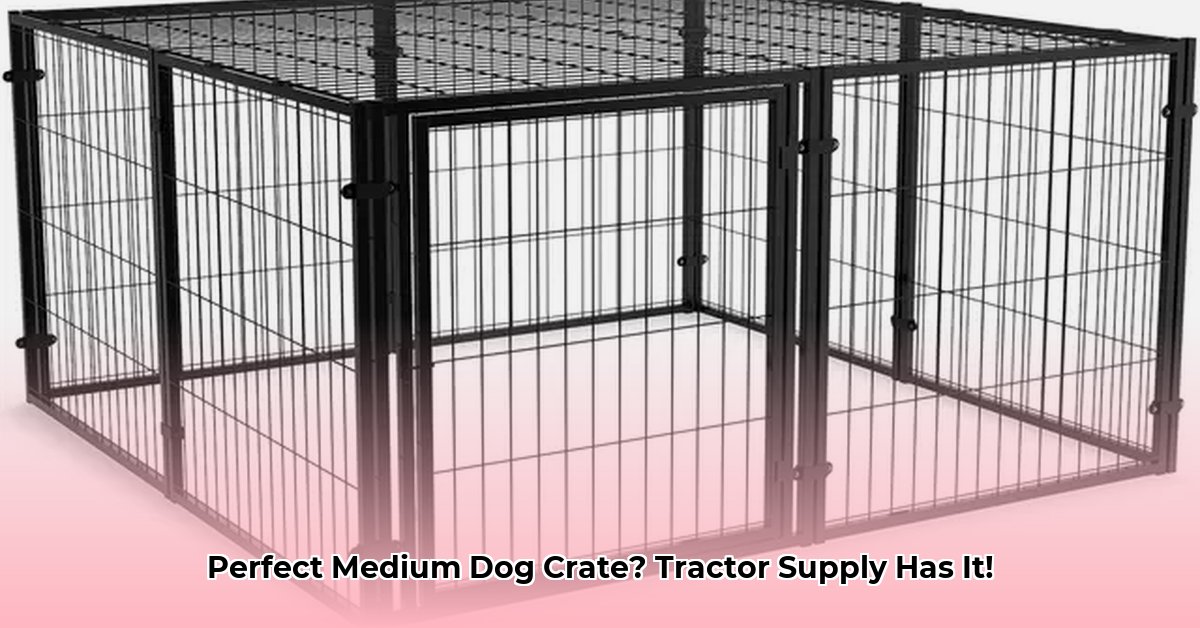
Choosing the right dog crate is crucial for your pet's safety, comfort, and successful house training. This guide provides an in-depth look at selecting the perfect medium-sized crate from Tractor Supply, covering everything from sizing and materials to setup and maintenance. A comfortable and secure crate is your dog's safe haven, contributing significantly to their overall wellbeing. For even larger breeds, check out these extra large options.
Sizing Up Your Canine Companion: Finding the Perfect Fit
The most important factor when choosing a crate is ensuring it's the right size. A crate that's too small will be cramped and stressful, while one that's too large might not provide the sense of security a dog needs. How do you find the Goldilocks fit?
First, measure your dog from the tip of their nose to the base of their tail. Now, add 6-12 inches to this measurement. This extra space allows your dog to comfortably stretch out and turn around. Don't forget height! Your dog needs enough room to stand and sit without hitting their head. Always cross-reference these measurements with the specific dimensions provided by Tractor Supply on their website (1) before purchasing. Remember, a slightly larger crate is preferable to one that's too small. Isn't your dog's comfort worth it?
Material Matters: Metal vs. Plastic Crates
Tractor Supply offers both metal and plastic medium-sized crates, each with its advantages and disadvantages.
| Material | Pros | Cons |
|---|---|---|
| Metal | Durable, secure, excellent ventilation, often longer-lasting | Can rust if not properly maintained, heavier, typically more expensive |
| Plastic | Lightweight, easy to clean, generally more affordable | Potential for chewing damage, less ventilation, may crack under stress |
A metal crate provides superior durability, particularly important if you have a chewer. However, plastic crates are lighter and easier to clean. The choice ultimately depends on your dog's personality and your budget. Consider a powder-coated metal crate for a balance of durability and corrosion resistance.
Essential Crate Features for Optimal Safety and Comfort
Beyond size and material, several features can significantly impact your dog's comfort and safety:
- Secure Latches: Multiple, strong latches are crucial to prevent escapes. Double latches are ideal.
- Ventilation: Adequate ventilation is essential for preventing overheating, especially during warmer months. Look for crates with ample ventilation holes or mesh panels.
- Wheels (Optional): Wheels are a convenient feature if you need to move the crate frequently.
- Dividers (For Puppies): Dividers allow you to adjust the crate size as your puppy grows, maintaining a secure and comfortable space.
- Easy Cleaning: Removable trays or easy-to-wipe surfaces simplify cleaning.
Always prioritize safety features; your dog's wellbeing should be paramount.
Exploring Tractor Supply's Medium Dog Crate Selection
Tractor Supply offers a variety of medium dog crates; use their online catalog (1) to compare models based on size, material, features, and customer reviews. Customer reviews often highlight hidden issues or unexpected strengths, providing invaluable insights that can help you make a more informed choice. Don't solely focus on price; consider the long-term value and durability. Is a slightly more expensive, longer-lasting crate truly more costly in the long run?
Setting Up and Using the Crate: Positive Reinforcement Techniques
Crate training shouldn't be a chore; it should be a positive experience for both you and your dog. A properly trained dog views its crate as a safe haven, not a punishment. Here's a step-by-step guide:
- Gradual Introduction: Allow your dog to explore the crate at their own pace; don’t force them inside.
- Cozy Environment: Add a comfortable bed, blanket, and familiar toys.
- Positive Reinforcement: Reward your dog with treats and praise for entering and staying in the crate.
- Short Sessions: Start with brief periods and gradually increase the duration.
- Consistency: Maintaining consistency is key to successful crate training. Inconsistent practice confuses dogs and impedes progress.
If you encounter difficulties, consider consulting a professional dog trainer or veterinarian for personalized advice.
Maintenance and Safety: Ensuring Your Dog's Crate Remains a Safe Space
Regular maintenance is vital to ensure the crate's longevity and your dog's safety:
- Regular Inspections: Check for damage (rust, cracks, loose parts) and address any issues promptly.
- Cleaning: Clean the crate regularly using pet-safe cleaners. The frequency depends on your dog and the manufacturer's instructions.
- Replacement: Replace the crate if it shows significant wear and tear. A damaged crate compromises your dog’s safety.
Remember, proactive maintenance saves you money and safeguards your pet.
Conclusion: Creating a Safe and Secure Environment for Your Dog
Choosing the right dog crate and implementing effective crate training techniques are vital steps in ensuring the safety and happiness of your canine companion. By carefully considering size, material, features, and implementing positive reinforcement, you can create a safe, comfortable, and secure space for your furry friend. If you have any concerns, consult your veterinarian or a certified dog trainer. Their expertise can provide valuable insights that will benefit your pet.